
Click the title above to open the LCGC Europe September 2013 regular issue, Vol 26 No 9, in an interactive PDF format.
Click the title above to open the LCGC Europe September 2013 regular issue, Vol 26 No 9, in an interactive PDF format.
Click the title above to open the LCGC North America September 2013 Application Notebook, Vol 31 No s9, in an interactive PDF format.
Click the title above to open the LCGC North America September 2013 regular issue, Vol 31 No 9, in an interactive PDF format.
Click here to view the full European E-newsletter from 29 August.

Experts in the food industry are always searching for natural sources of bioactive compounds to develop products that enhance athletic performance. A new study has suggested that drinking watermelon juice may alleviate muscle ache experienced by many athletes, and non-athletes, following a period of exercise. The study published in the Journal of Agricultural and Food Chemistry showed that naturally high levels of L-citrulline in watermelon juice may be more effective than pharmacological supplements.

Part 1 of evidence to demystify HPLC and UHPLC column myths
Scientists from the University of Bradford (Bradford, UK) have utilized liquid chromatography?tandem mass spectrometry (LC-MS-MS) to gain further insight into the child sacrifice practices of the Inca people.1 Their findings indicate the use of alcohol and cocaine (COC) as a method of victim sedation.
Evidence to demystify HPLC and UHPLC column myths
Experts in the food industry are always searching for natural sources of bioactive compounds to develop products that enhance athletic performance. A new study has suggested that drinking watermelon juice may alleviate muscle ache experienced by many athletes, and non-athletes, following a period of exercise. The study published in the Journal of Agricultural and Food Chemistry showed that naturally high levels of L-citrulline in watermelon juice may be more effective than pharmacological supplements.
Thermo Fisher Scientific (California, USA) has established a new Pesticide Analysis Center of Excellence (COE) in Runcorn, UK. The center is a new resource available to government and industrial laboratories looking to improve methods for the monitoring and measurement of pesticides in the environment.

Scientists from the University of Bradford (Bradford, UK) have utilized liquid chromatography?tandem mass spectrometry (LC-MS-MS) to gain further insight into the child sacrifice practices of the Inca people.1 Their findings indicate the use of alcohol and cocaine (COC) as a method of victim sedation.

Scientists from the University of Bradford (Bradford, UK) have utilized liquid chromatography?tandem mass spectrometry (LC-MS-MS) to gain further insight into the child sacrifice practices of the Inca people.1 Their findings indicate the use of alcohol and cocaine (COC) as a method of victim sedation.

Kate Mosford of The Column spoke to Rosario LoBrutto of Teva about the business of analytical QbD, the steps involved in implementing it, and advice to those who want to get started.

The 2013 Emerging Leader in Chromatography Award is granted to Davy Guillarme. Here we look at his career and accomplishments so far.

A novel SFE and GC–MS method to characterize cigarette smoke is presented.
Click here to view the full European E-newsletter from 22 August.

Incognito thinks on how our analytical lives could be improved through the use of pattern recognition.
The American Chemical Society (ACS) has named Daniel W. Armstrong, professor of chemistry and biochemistry at the University of Texas Arlington (Texas, USA), to its 2013 Class of Fellows.

Metrohm USA, the North American subsidiary of Swiss instrument manufacturer Metrohm AG, have pledged their support to the Feeding America organization
Part 1 of evidence to demystify HPLC and UHPLC column myths
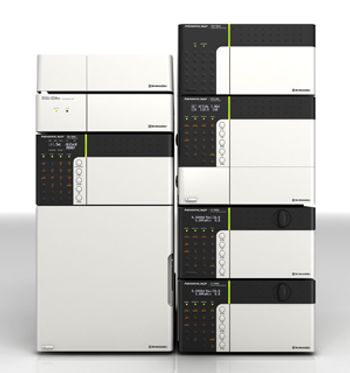
Ultra-high sensitivity, expanded flexibility, increased stability and robustness - the Nexera X2 UHPLC system targets routine analysis and applications in highly regulated envi-ronments demanding complex system setups.
In new research, separation scientists from the University of Lyon, France, have compared different configurations of on-line two-dimensional liquid chromatography (2D LC) for the separation of charged compounds such as peptides.
Fasha (Farshad) Mahjoor, CEO of Phenomenex (California, USA), has been elected to the American Red Cross Los Angeles Region Board of Directors. The appointment follows the award of the Ellis Island Medal of Honor to Mahjoor earlier this year, for building a socially responsible international business and for his humanitarian efforts in the USA and worldwide.
Waters Corporation (Massachusetts, USA) has acquired the UK-based company Nonlinear Dynamics Ltd (Newcastle upon Tyne, UK). The acquisition marks the goal of Waters to advance the rate of discovery in proteomics, metabolomics, and lipidomics.
Click here to view the complete E-Separation Solutions newsletter from August 15, 2013.
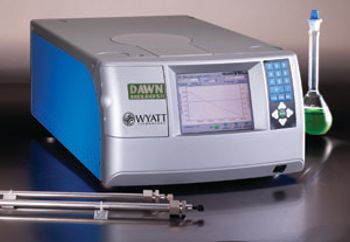
Based on Wyatt Technology’s family of multi-angle light scattering detectors, the new DAWN HELEOS-II boasts 18-angles of detection for the greatest sensitivity for absolute molecular weight and size determinations of polymers and biopolymers in solution. It may be connected in series to any chromatographic system in order to determine absolute molar masses without the use of reference standards or column calibration.

Chromatography can be approximated by a series of equilibrium events between the mobile phase and stationary phase. Here, LCGC Blog editor Kevin Schug discusses an exceptional spreadsheet macro written by an undergraduate researcher that helps users visualize the development of chromatographic separations.
An interview with Norman Dovichi, winner of the 2013 ANACHEM Award. This interview is part of the 2013 podcast series presented in collaboration with the Federation of Analytical Chemistry and Spectroscopy Societies (FACSS), in connection with SciX 2013, the federation?s North American conference.

Comprehensive two-dimensional gas chromatography (GCXC) has been performed to identify the origins of a mysterious oil sheen in the Gulf of Mexico, first reported in September 2012. The results have been published in the journal Environmental Science and Technology1 by researchers from the University of California (California, USA) and the Wood Hole Oceanographic Institute (WHOI) (Massachusetts, USA).
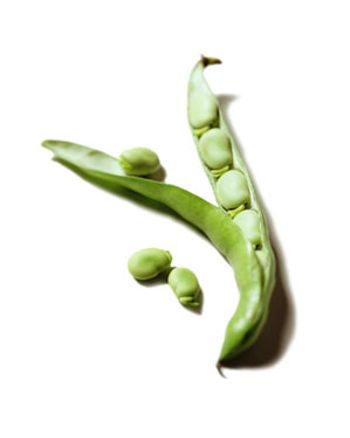
Fava beans are a good source of polyphenols and are located in different parts of the plant. Phenolic compounds are thought to contribute to the overall antioxidant activities of plant foods. However, there is a lack of information on the phenolic composition of the seeds (beans) of some edible varieties. This has led a team of researchers based in Chile and Spain to use high performance liquid chromatography (HPLC) to identify the composition of a variety of immature fava seeds.1
