






Food and Beverage Analysis
Latest News
Advertisement
Latest Videos




Shorts



Advertisement
More News
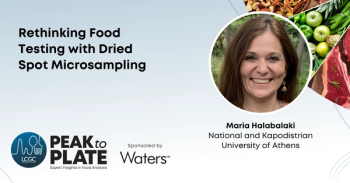
LCGC International spoke to Maria Halabalaki, an associate professor at the National and Kapodistrian University of Athens, about how dried spot microsampling could transform food testing.

Ana Rodríguez-Bernaldo de Quirós of the University of Santiago de Compostela discusses how non-targeted gas chromatography–mass spectrometry (GC–MS) can reveal complex chemical mixtures in bioplastic food packaging, raising important safety questions and concerns for consumers.

A non-targeted high-resolution mass spectrometry strategy was developed to detect PFAS in food beyond the limits of conventional targeted methods. A non-targeted high-resolution mass spectrometry strategy was developed to detect PFAS in food beyond the limits of conventional targeted methods. Using a single extract for both approaches, data prioritization and ion mobility mass spectrometry helped identify previously unsuspected PFAS, expanding analytical coverage for food safety monitoring.

Are chemometrics and artificial intelligence (AI) currently delivering real value in relation to pattern recognition, anomaly detection, and spectral libraries in food fraud and food adulteration applications? The panel explore potential risks when chemical understanding is not strong enough.

Nontargeted high-resolution mass spectrometry (HRMS) workflows are getting a lot of attention. The panel explore where these worklows are genuinely advancing authenticity testing, and if these workflows are meeting expectations.

Peter Tranchida explains how cryogenic band compression and GC×GC boost sensitivity while reducing sample preparation demands in complex food analyses.
Food matrices are notoriously complex. The panel explore how to overcome the biggest challenges to develop validated, reproducible methods that hold up across regions, seasons, and suppliers.

The limitations of current analytical techniques in food adulteration and food fraud are explored and complementary techniques that can enhance results are discussed.
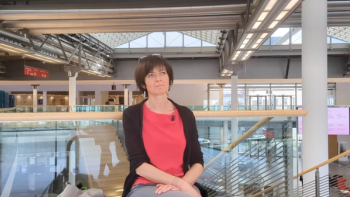
In this interview recorded at analytica 2026 in Munich, Giorgia Purcaro discusses how GC‑based hyphenated techniques are reshaping the analysis of complex food samples.
Food is one of the most challenging matrices to analyze in terms of complexity. The panelists explore the role that chromatography plays in food authenticity and food fraud applications to successfully analyze such complex matrices.

The panelists explore how food authenticity is defined in today’s global supply chain, and how that definition has evolved as fraud has become more sophisticated and difficult to detect.
The panelists introduce themselves and describe their expertise in separation science and experience in food authenticity and food fraud research.
Giorgia Purcaro explains how hyphenated GC and GC×GC deliver rich fingerprints, simplify prep, and enable targeted and untargeted food analysis.

A review of some of the content highlights from LCGC International in 2025.

Technology Spotlight: Natural Deep Eutectic Solvents (NADES) — A Sustainable Sample Preparation Tool for Food Analysis
Published: | Updated:
Laura Carbonell-Rozas, a post-doctoral researcher at the University of Granada (Granada, Spain), discusses the potential of natural deep eutectic solvents (NADES) in food analysis as sustainable solvents in sample preparation.

A look at recent advances in pesticide residue analysis across diverse food matrices.

The development of a high-throughput LC–MS/MS method for quantifying 135 pesticides with improved accuracy and robustness is discussed.

A recent study details the development of an LC–MS/MS method for detecting pesticide residues in a challenging matrix, chili powder.
Webcasts
Webinar Date/Time: Wednesday, October 29, 2025 Morning Session: 2:00pm GMT | 3:00pm CET | 9:00am EST Afternoon Session: 5:00 pm GMT | 6:00 pm CET | 12:00 pm EST

A recent study examined a new method to optimize raisin production by demonstrating how pretreating grapes with extra-virgin olive oil (EVOO) before dehydration can significantly improve the retention of beneficial phenolic compounds during raisin production and storage.

Trap focusing offers a powerful solution to common challenges in headspace (HS) and solid-phase microextraction–gas chromatography (SPME–GC) analysis of foodstuffs, including poor peak shape, limited sensitivity, and restricted dynamic range. This article explores how automated cryogen-free focusing, combined with multi-step enrichment and re-collection capabilities, can improve the detection and quantitation of both aroma-active compounds and trace-level contaminants. Using real-world examples, including flavor profiling of cola and garlic, and quantitation of ethylene oxide and epichlorohydrin in spices, enhanced chromatographic performance, greater confidence in compound identification, and lower detection limits than traditional workflows such as direct SPME or QuEChERS (Quick, Easy, Cheap, Effective, Rugged, and Safe) are demonstrated.

A recent study demonstrated how analytical techniques can be used to differentiate between different types of whiskey.

The approach describes a new untargeted, trapped-headspace (THS)-GC-QMS-IMS setup for an exhaustive VOC analysis of complex food, beverage, and flavor products, and allows the classification of mango cultivars in combination with chemometric data evaluation.

We highlight how chromatography is being used to analyze Irish whiskeys.

Researchers at the Dalian Institute of Chemical Physics at the Chinese Academy of Sciences, have developed a rapid FastGC-PICI-TOFMS method that detects the carcinogenic compound ethyl carbamate in Chinese liquor in under four minutes.
Advertisement
Advertisement