All News

Catherine C. Fenselau, professor of chemistry and biochemistry at the University of Maryland, is the 2012 recipient of the Award for a Distinguished Contribution in Mass Spectrometry, granted by the American Society for Mass Spectrometry (ASMS). The award honors her pioneering work to apply mass spectrometry to the rapid identification and characterization of intact microorganisms.
The impact of the oil spill in the Gulf of Mexico is still creating headlines two years later. Helen White, assistant professor of chemistry at Haverford College, Haverford, Pennsylvania, USA, has published a paper on her group's findings from the spill. LCGC's E-Separation solutions spoke to her to find out more.

wyatt-770637-1408605891145.jpg

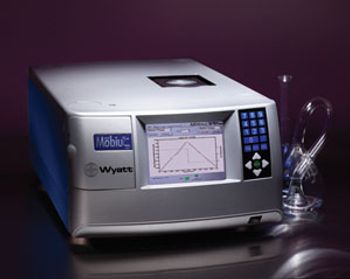
Wyatt Technology?s Möbius is the first and only light scattering instrument that makes reliable, reproducible, and non-destructive zeta potential measurements of macromolecules as small as 1 nm, under dilute solution conditions.

Agilent-766018-1408607706250.jpg

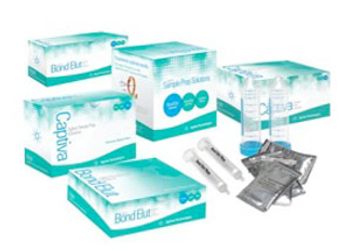
Greater confidence in your results?Sample Preparation solutions for your Food and Environmental analyses.

Lacquered up

A team of Japanese scientists has developed a method for analysing the identity of a lacquer source using lithium ion (Li+) attachment mass spectrometry (Li+IAMS).

A rapid method has been developed for detecting ethyl carbamate (EC) in alcohol.

Bioanalysts are faced with a variety of separations challenges, including how to select appropriate stationary phases and problems with sample preparation and cleanup. Participants in this Tech Forum are Maureen Joseph and Linda L. Lloyd of Agilent Technologies; Patrik Appelblad, Ling Bei, and Dave Lentz of EMD Millipore; and Jason P. Weisenseel of PerkinElmer.

brush-774281-1408605376050.jpg

Restoration art

A group of researchers has conducted an investigation into the degradation process of proteinaceous binders due to ultra violet (UV) light in old works of art.

headache-774282-1408605374895.jpg

Migraine pain

Migraines and chronic daily headaches can have a debilitating effect on day-to-day life. By using magnetic resonance imaging (MRI) it has been found that iron accumulation in the brain has been correlated with both the duration of illness and the frequency of attacks.

Are you plagued by the phrase, 'I just haven't had time...?' Incognito asks how much more productive we would be if only we had the time.

The first presentation in the session will be given by Cong Wu of the Department of Biochemistry at the University of Illinois (Urbana, Illinois) and The Institute of Genomic Biology (Urbana, Illinois), and is titled ?An Efficient and Restricted Protease for Middle Down Proteomics.? Wu will discuss a highly efficient and restricted proteolytic approach to produce large peptides that empowers robust and routine middle down proteomics.

The six presentations offered Wednesday afternoon will examine regulated bioanalysis using LC-MS and the resulting opportunities, including HRMS for drug discovery, QTOF for quantification purposes, pharmacokinetic sample analysis, accurate mass LC-MS, and HRMS phospholipid quantitation.

The six presentations scheduled for Tuesday will focus on advances in ionization and sampling techniques in mass spectrometry, including sub-ambient pressure ionization with nanoelectrospray, synchronized discharge ionization, the use of a backpack mass spectrometer, surface acoustic wave nebulization, in-line mass spectrometry analysis, and atmospheric pressure laser-induced acoustic desorption chemical ionization.

The Minnie Stevens Piper Foundation, a non-profit, charitable corporation, has named Jorge Gardea-Torresdey one of 10 Piper Professors for superior teaching at the college level.

Joshua J. Coon, associate professor of chemistry at the University of Wisconsin-Madison, is the 2012 recipient of the Biemann Medal, awarded by ASMS. The Meal honors a significant achievement in basic or applied mass spectrometry made by an individual early in his or her career.

This Wednesday morning session will include discussion of nanoscale separations and MS analysis for applications such as ultratrace molecular profiling, high-throughput top-down protein analysis, peptides in complex samples, and ionogenic metabolites in body fluids.

AB SCIEX (Framingham, Massachusetts, USA) is using a variety of social media outlets to connect scientists with their MASStastic Voyage mobile lab tour, which is currently making its way across North America.

The Centre for Genomic Regulation (CRG) (Barcelona, Spain) and the National Centre for Genomic Analysis (CNAG) (Barcelona, Spain) have signed an agreement to collaborate and boost research in the field of genomic analysis.

The impact of the oil spill in the Gulf of Mexico is still creating headlines two years later. Helen White, assistant professor of chemistry at Haverford College, Haverford, Pennsylvania, USA, has published a paper on her group's findings from the spill. LCGC's E-Separation solutions spoke to her to find out more.

shimadzu-766562-1408607274265.jpg

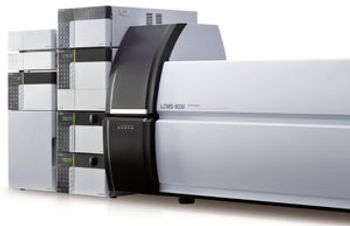
LCMS-8030

Shimadzu's LCMS-8030 features the most innovative technology found in a commercial tandem quadrupole mass analyzer. Combined with the class-leading Nexera UHPLC, both systems facilitate seamless LC/MS/MS analyses in a high-performance, high-speed flow, steadily and reliably.