
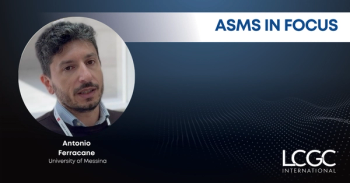
Antonio Ferracane addresses regulator concerns about cleanup-free PAH methods, noting cleanup isn't mandatory if matrix validation proves reliable.

Kate Jones is the Associate Editorial Director at LCGC International/The Column, MJH Life Sciences.
Antonio Ferracane addresses regulator concerns about cleanup-free PAH methods, noting cleanup isn't mandatory if matrix validation proves reliable.
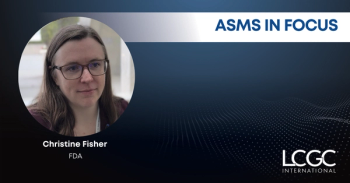
The approach remains non-targeted by prioritizing PFAS-like ions in the first DDA pass; the tunable mass tolerance window can be adjusted to capture structurally unusual PFAS subclasses.
Christine Fisher describes her method using mass defect filtering at the data acquisition stage to improve non-targeted PFAS detection in complex food matrices.
Antonio Ferracane explains how each sample prep step adds error and can strip target PAHs, so skipping cleanup can improve recovery, accuracy, and precision.
Antonio Ferracane discusses moving to minimal sample preparation for PAH analysis, and why matrix-matched calibration can replace cleanup steps.
Antonio Ferracane outlines a combined technique using cryogenic peak compression and pseudo-MRM to sharply boost sensitivity for trace PAHs.
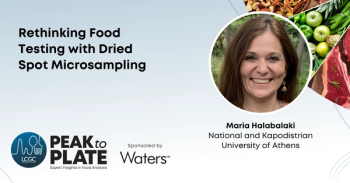
LCGC International spoke to Maria Halabalaki, an associate professor at the National and Kapodistrian University of Athens, about how dried spot microsampling could transform food testing.

Ana Rodríguez-Bernaldo de Quirós of the University of Santiago de Compostela discusses how non-targeted gas chromatography–mass spectrometry (GC–MS) can reveal complex chemical mixtures in bioplastic food packaging, raising important safety questions and concerns for consumers.

Chromatography’s future depends on inclusive leadership, mentorship, communication, and human skills alongside technical expertise.

A discussion on mentorship, industry gaps, and how confidence, exposure, and support shape careers in analytical science.

"Peak to Plate: Expert Insights in Food Analysis" explores how chromatography and mass spectrometry help experts detect contaminants, verify authenticity, and advance food analysis.
Jef Focant on whether workflows transfer between biological matrices, and which holds the most promise for minimally invasive disease monitoring.
Jef Focant considers how far we are from fully automated, standardized GC×GC data processing pipelines accessible to labs without specialist chromatography knowledge.
Jef Focant on what methodological and study design changes will drive volatolomics from promising biomarker discovery results to clinically actionable tests.
Jef Focant discusses where comprehensive two-dimensional gas chromatography fits in a clinical setting increasingly demanding rapid, low-cost diagnostic solutions.
Sébastien Rolle outlines how the environmental footprint of analytical instruments and methods can be quantified across the full product life cycle.
Sébastien Rolle explores the practical barriers preventing wider adoption of SFE and SFC, and what instrument manufacturers can do to lower them.
Sébastien Rolle discusses the trade-offs between greener instrument design and analytical performance, addressing sensitivity, throughput, and method robustness for laboratory scientists.

Submit your latest chromatography products—including HPLC, GC, columns, and software—for inclusion in our upcoming new products article.
Sébastien Rolle examines four levels of manufacturer sustainability impact and questions whether the analytical chemistry industry is moving fast enough across all fronts.
Gauthier Eppe discusses the vast data complexity that arises when ion mobility is layered on top of HRMS in non-targeted contaminant screening workflows.
Gauthier Eppe discusses how applicable the SWIM approach is beyond halogenated POPs.
The sliding windows in ion mobility (SWIM) approach leverages predictable correlations between retention time and collision cross-section values to improve confidence in identifying semi-volatile contaminants by GC-IMS-HRMS.
At analytica 2026, Gauthier Eppe described adding ion mobility–HRMS to GC–HRMS workflows to support analysis of environmental pollutant mixtures.

Rasmus Bro shows how generative AI extends chemometrics by automating curation, linking analytical data with text knowledge, and improving interpretation.
Kevin Schug identifies the key challenges preventing wider uptake of molecular encoding and machine learning tools in everyday analytical laboratory settings.
Kevin Schug examines how models trained on known compounds perform when applied to unseen molecules or transferred to new experimental setups.
Kevin Schug outlines the criteria used to select machine learning methods for analytical problems and how success is defined and evaluated.
Peter Tranchida on the robustness of enantiomeric ratio profiling across food types.
Kevin Schug explores how molecular encoding bridges chemistry and data science to enhance precision and intelligence in analytical measurements.

April 6th 2022

July 8th 2022

March 18th 2026

October 27th 2023

